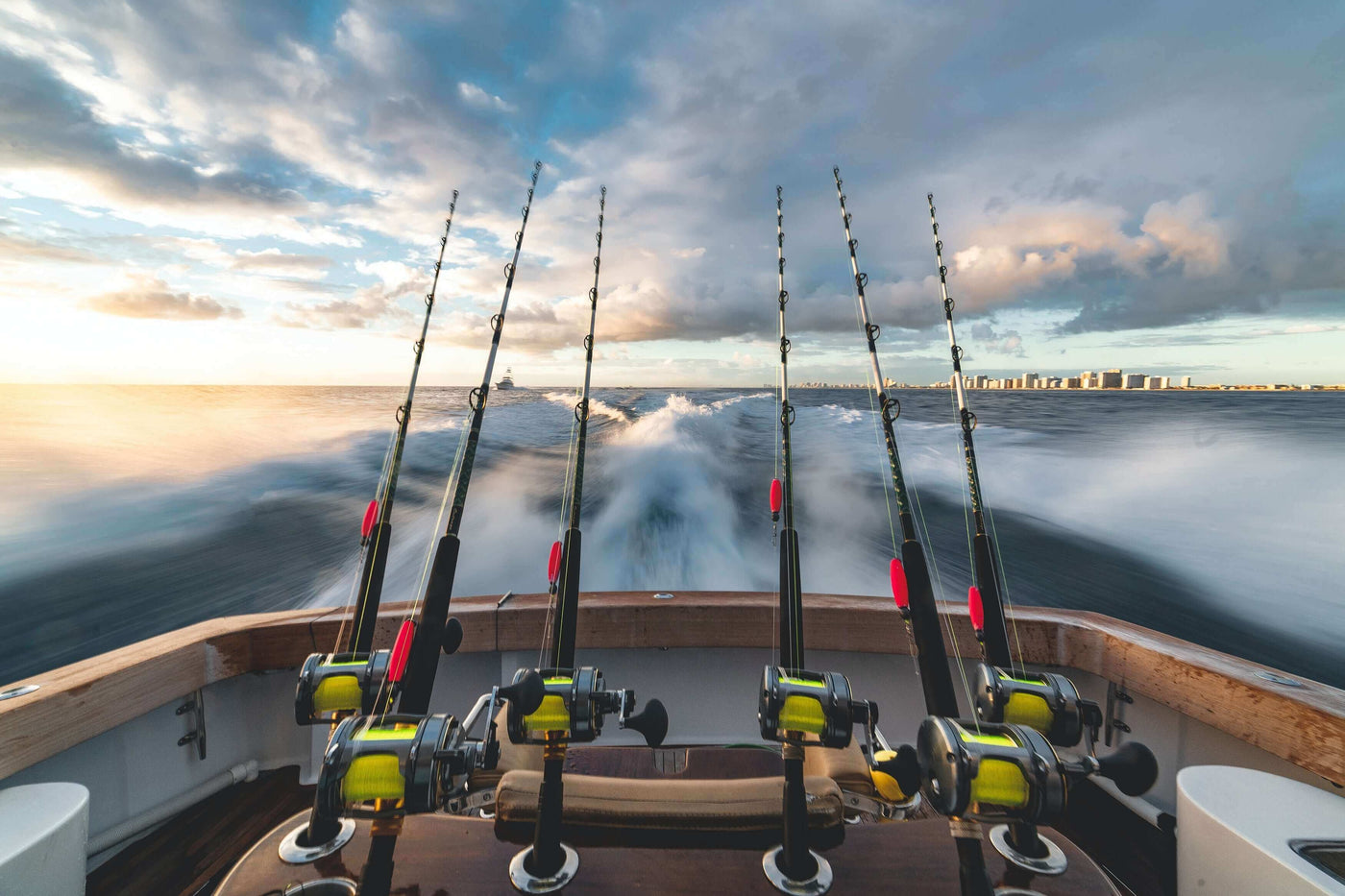
Marine safety and survival equipment is categorized into two main groups: legally required gear (federal/USCG mandates) and survival gear (high-performance equipment for emergencies). The requirements often depend on your vessel's size and where you are boating (e.g., coastal vs. inland).
USCG Required Safety Equipment
To be compliant with federal regulations, every recreational vessel must carry these essentials. Failure to have these can lead to fines and, more importantly, unsafe conditions.
-
Personal Flotation Devices (PFDs): You must have one USCG-approved life jacket for every person on board. Vessels 16 feet or longer must also carry at least one Type IV throwable device (like a ring buoy or cushion).
-
Fire Extinguishers: Boats with engines or enclosed fuel compartments must carry marine-rated fire extinguishers. For boats 26–40 feet, two 5-B or one 20-B extinguisher is typically required.
-
Visual Distress Signals (VDS): Coastal boaters are required to carry both day and night signals. This usually means a set of three handheld flares or a USCG-approved electronic SOS light.
-
Sound-Producing Devices: Every boat must have a way to signal—a simple whistle or compressed air horn is sufficient for smaller boats, while vessels over 39 feet must also have a bell.
Survival & Emergency Equipment
For offshore or heavy-weather boating, "required" gear isn't enough. Professional survival equipment is designed to keep you alive until rescue arrives.
-
Emergency Beacons (EPIRB/PLB): An EPIRB (Emergency Position Indicating Radio Beacon) is a "must-have" for offshore trips. When activated, it sends your precise GPS location to rescue satellites worldwide.
-
Immersion Suits: Also known as "Gumby Suits," an immersion suit provides thermal protection to prevent hypothermia if you end up in cold water.
Safety Gear Comparison by Use Case
| Category |
Coastal/Inshore |
Offshore/Blue Water |
| Communication |
Handheld VHF Radio |
Fixed-Mount VHF + Satellite Phone |
| Location |
Visual Flares |
EPIRB + AIS Transponder |
| Protection |
Standard Life Jacket |
Life Raft + Immersion Suit |
| Medical |
Basic First Aid Kit |
Advanced Trauma Kit |
Quick Recommendation:
If you stay within sight of land, focus on a high-quality VHF radio and comfortable life jackets that everyone will actually wear. If you plan to head offshore, investing in an EPIRB and a Life Raft is the single best way to ensure your crew's survival in a catastrophe.

 Sold outUp to 40% off